

Vortrag (in deutscher Sprache) von Prof. Dr. Xosé M. Núñez Seixas, Professor für Neueste Europäische Geschichte an der Universität Santiago de Compostela
 Im Lichte der aktuellen politischen Ereignisse in Spanien soll im Vortrag eine Typologisierung der spanischen Nationalismus-Diskurse seit der Transition skizziert werden, mit besonderer Berücksichtigung des Zeitraums 2004–2018. Xosé M. Núñez Seixas widmet sich den gegensätzlichen Versionen der spanischen Nationalgeschichte sowie den unterschiedlichen Reaktionen der Hauptströmungen des spanischen Patriotismus auf die Herausforderung durch die peripheren Nationalbewegungen, insbesondere die katalanische Bewegung, seit 2012. Für die konservative Rechte lässt sich feststellen, dass altbekannte Argumente des spanischen Traditionalismus – mit einem modernen Anstrich versehen – wieder an Aktualität gewinnen.
— 5. Dezember 2018, 19:00 Uhr
Veranstaltungsort: Hamburger Institut für Sozialforschung, Mittelweg 36, 20148 Hamburg
Organisation: Hamburger Institut für Sozialforschung, Mittelweg 36, 20148 Hamburg; Instituto Cervantes Hamburg, Chilehaus, Fischertwiete 1, 20095 Hamburg
 Toletum heißt

 Weitere Höhepunkte:
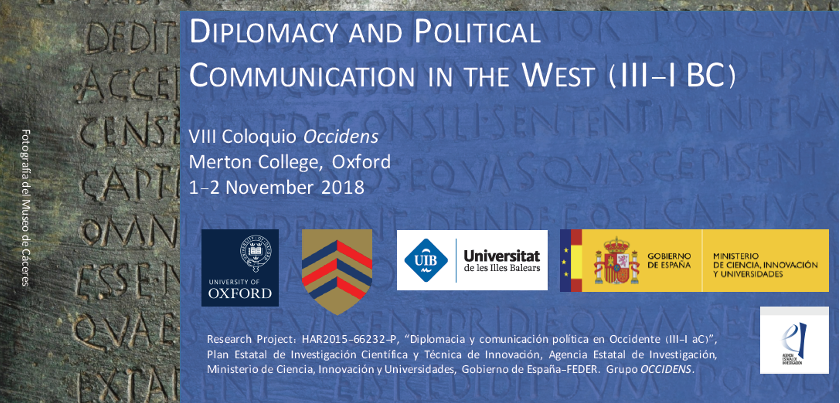 8. Kolloquium der Forschergruppe Occidens. Mit Beiträgen u. a. von
 Organisation: Enrique García Riaza (Universitat de les Illes Balears) und Jonathan Prag (Merton College, Oxford) / Proyecto HAR2015-66232: “Diplomacia y comunicación política en Occidente, III-I a. C.)” HAR2011-27782