TOLETUM lädt zu seinem 9. Workshop ein, der dieses Jahr vom 25. bis 27. Oktober 2018 in Zusammenarbeit mit Paulo Henrique de Carvalho Pachá (Universidade Federal Fluminense, Rio de Janeiro) im Hamburger Warburg-Haus stattfindet.
Die internationale Tagung setzt sich zum Ziel, die Etablierung der 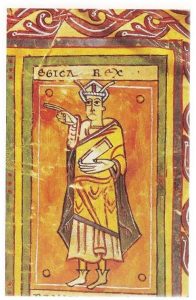 Vorherrschaft Toledos und damit den Integrationsprozess im hispanischen Westgotenreich zu analysieren. In vier Sektionen sollen auf der Grundlage neuester Funde und Befunde das Verhältnis der Zentrale zu den lokalen Mächten (Konzepte von zentraler und lokaler Macht), der Komplex der Ethnizität (Macht und Ethnizität), materielle Manifestationen von Herrschaft wie Städtebau, Münzprägung etc. (Repräsentationen von Macht) und die Rolle der Kirche als Konstituente von Herrschaft (Macht und Kirche) untersucht werden. Mit Beiträgen u.a. von
Herwig Wolfram (Universität Wien), How to stay Gothic without a Gothic king?
Javier Arce (Université de Lille), The Visigoths in Hispania: new perspectives concerning arrival and settlement
Stefan Esders (Freie Universität Berlin), ‚Fugitives‘ and ‚traitors‘: A discourse on center and periphery in Visigothic law
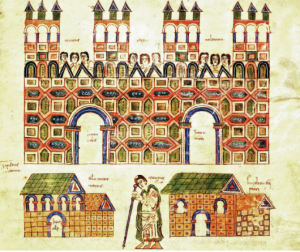 Walter Pohl (Universität Wien), Power and strategies of identification in Visigothic Spain
Lauro Olmo Enciso (Universidad de Alcalá), Recópolis, the representation of power in a complex landscape
Eduardo Manzano Moreno (Consejo Superior de Investigaciones Científicas Madrid), The day after. The Umayyad point of view
Weitere Informationen folgen in Kürze; Interessierte sind herzlich willkommen!
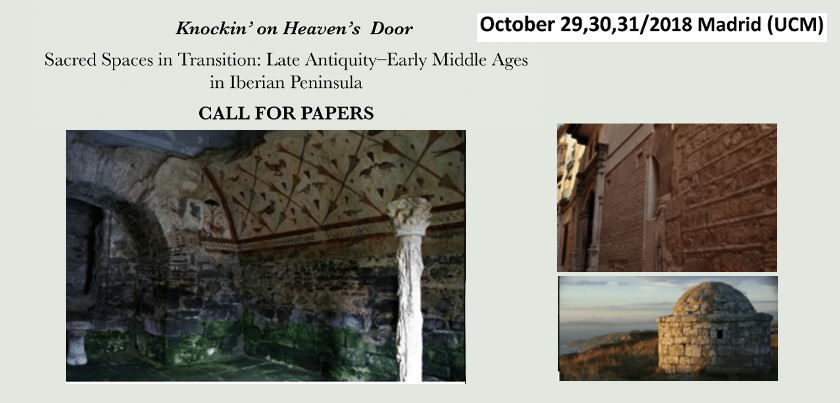 Aus dem Ankündigungstext der Veranstalter: „(…) This conference will try to define a theoretical approach for the transition of sacred spaces in the Iberian Peninsula between the 4th and 10th century, complemented by illustrative case studies in this area. Tradionally scholars analyze these problems considering Spain and Portugal from the point of view of currently politcal frontiers, forgetting the cartography of Roman provincial division inherited from Antiquity and slightly transformed in the Visigoth period; and the new Islamic order after the conquest. In this sense we put forward a comparative framework of analysis in both countries in order to avoid distorsions and to highlight the common past of both countries. (…).“