
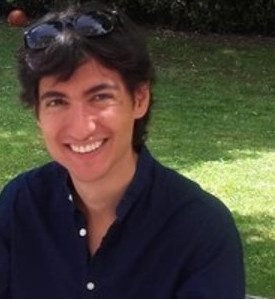
 Toletum heißt Rubén Olmo López herzlich willkommen! Rubén ist Althistoriker; er wurde 2016 an der Universidad Complutense de Madrid mit einer Studie promoviert, die gerade im LIT-Verlag erschienen ist: El centro en la periferia: Las competencias de los gobernadores provinciales romanos en Hispania durante el Principado, Berlin 2018 (= Geschichte und Kultur der Iberischen Halbinsel; 14).
Dank eines Postdoc-Stipendiums des Xunta de Galicia verbringt er nun die nächsten sechs Monate an der Universität Hamburg. Während seines Aufenthaltes hier arbeitet er an einem Projekt mit dem Titel Hacia la construcción de un marco de convivencia en Occidente: Las funciones oficiales y el comportamiento social de los procónsules de África durante el Alto Imperio romano. 2014 war er schon einmal hier und hat am 5. Workshop von Toletum über „Spielstätten zwischen Republik und Spätantike“ teilgenommen.
Rubén, wir freuen uns sehr, dass Du hier bist!
Autor: Sabine Panzram
Memoria, Religion und Gesellschaft in der Antike
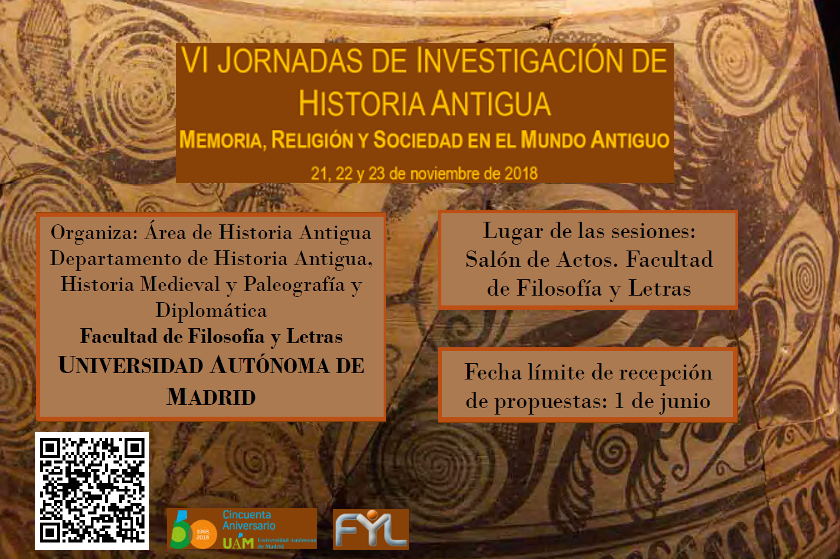
Aus dem Ankündigungstext der Veranstalter: „(…) Estas Jornadas se concibieron con el objetivo de que fueran un espacio de debate e intercambio de ideas entre doctorandos y jóvenes doctores en torno a temas candentes de la investigación actual sobre el Mundo antiguo. (…)
En esta ocasión, queremos adentrarnos desde una perspectiva multifocal en uno de los aspectos más fascinantes –y acaso más complejos– de nuestra disciplina. Según se desprende de los estudios históricos y antropológicos de las últimas décadas, memoria y religión pueden concebirse como construcciones culturales, sociales por antonomasia, coadyuvantes en el proceso de creación y recreación de una cosmogonía compartida en torno a la que la sociedad se organiza como tal. Si entendemos que la memoria social comprende aquellos discursos tendentes a construir un pasado colectivo negociado que dé sentido a nuestro presente, y que la religión aporta al ser humano una explicación de todos aquellos intersticios de su mundo que escapan a su experiencia empírica, colegiremos que religión y memoria, memoria y religión, se revelan ante el historiador como vías excepcionales de aproximación a las sociedades antiguas, a su manera de estructurarse y de concebir el mundo en el que estaban insertas. (…).“
Mit Beiträgen u.a. von:
Jorge García Cardiel (Universidad Autónoma de Madrid), La difícil negociación de la memoria: tumbas y depósitos votivos en la Albufereta de Alicante (ss. III-II a.C.)
Cristina García García (Universidad Autónoma de Madrid), Creación y reelaboración de un pasado mítico en la Macedonia argéada
Rubén Escorihuela Martínez (Universidad de Zaragoza), Identidad y control en los signa militaria: el poder de la imagen en el ejército republicano
Esther Sánchez Medina (Universidad Autónoma de Madrid), Genoveva de París: conversión y memoria de la realeza franca
Nathalie Klinck (Universität Hamburg), „Christianus(a) sum” – Northern Africa and its martyres. The veneration of saints and its function in early Christianity
21. bis 23. November 2018
Organisation: Adolfo Domínguez Monedero, Esther Sánchez Medina y Jorge García Cardiel – Área de Historia antigua, Departamento de Historia antigua, Historia medieval y Paleografía y Diplomática, Universidad Autónoma de Madrid
Veranstaltungsort: Salón de Actos, Facultad de Filosofía y Letras, Universidad Autónoma de Madrid
Programm: Memoria, religión y sociedad, Madrid 11.2018
Das Christentum in der Spätantike. Neue Perspektiven – Tarragona, 11/2018

Aus dem Ankündigungstext der Veranstalter: „(…) Creemos que ha llegado el momento de valorar, interpretar y dar a conocer de nuevo la importancia excepcional de los testimonios arqueológicos de aquella Tarraco christiana que fue centro del gobierno provincial romano y más tarde ciudad y ceca visigoda, lugar de peregrinaje a la tumba de los santos mártires Fructuoso, Augurio y Eulogio, nombrada sede de un obispado metropolitano y por todo esto progresivamente convertida en una gran civitas ecclesiastica, escenario del concilio provincial del año 516.
(…) Ahora, de acuerdo con la sección histórico-arqueológica del Institut d’Estudis Catalans y la cátedra de Arqueología Cristiana de la Universitat de Barcelona, se ha decidido organizar conjuntamente en nuestra ciudad la VII Reunión de Arqueología Cristiana Hispánica haciéndola coincidir con el IV Congreso Internacional de Arqueología y Mundo Antiguo Tarraco Biennal. (…)“
Mit Beiträgen u.a. von:
Josep M. Gurt (Universitat de Barcelona), Arqueologia del Cristianisme al segle XXI. Quina arqueologia?
Montserrat Claveria (Universitat Autònoma de Barcelona), La representación del/la difunto/a en los sarcófagos de la Tarraconense de los siglos III al V
Julia Beltrán de Heredia (Ateneu Universitari Sant Pacià), Arrianos y católicos, nuevas perspectivas en la investigación arqueológica
Josep Anton Remolà Vallverdú (Museu Nacional Arqueològic de Tarragona) / Ada Lasheras González (Institut Català d’Arqueologia Clàssica), Ad suburbanum Tarraconis. De l’àrea portuària al conjunt eclesiàstic del Francolí
Pedro Marques (UNIARQ – Centro de Arqueologia (FLUL) / DGE / IPAEHI), A construção da parte portuguesa das obras Inscriptiones Hispaniae Christianae e Inscriptionum Hispaniae Christianarum Supplementum, de Emílio Hübner
21. bis 24. November 2018
Organisation: Joaquín Ruiz de Arbulo, Universitat Rovira i Virgili; Jordi López, Institut Català d’Arqueologia Clàssica
Veranstaltungsort: Salón de Actos del Campus Catalunya. URV. Av. Catalunya, 35. Tarragona
Programm: Tarraco Biennal 11.2018
Bruch und Kontinuität im Straßennetz der klassischen Stadt zwischen Kaiserzeit und Spätantike
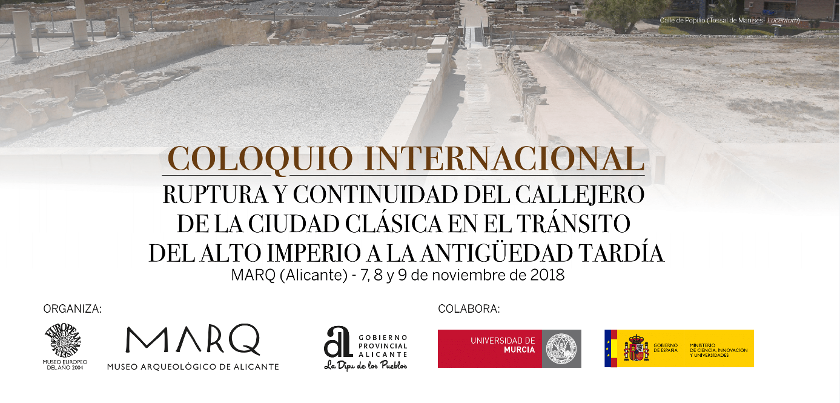
Internationales Kolloquium – Aus dem Ankündigungstext der Veranstalter: „La ciudad clásica altoimperial, uno de los máximos exponentes de la romanidad, fue, como todo producto histórico, fruto de unas condiciones sociopolíticas y económicas determinadas. (…) Su desarrollo es inseparable de toda una serie de mutaciones a diversas escalas que afectaron a este Imperio-mundo y sus herederos directos, desde el momento de su definición hasta su sustitución por nuevas concepciones urbanas de tradición no helenística-romana o su completa transmutación. (…) Este complejo proceso histórico se plasmó en lo material y lo inmaterial en sus callejeros urbanos, auténticos ejes vertebradores y arterias vitales de un modelo político y administrativo construido en y en torno a las ciudades. La evolución de sus calles, los recrecimientos experimentados por sus vías, la adecuación de sus sistemas de evacuación, los cambios funcionales de estos espacios públicos por excelencia, sus mutaciones estructurales, su papel como reflejo de nuevas prácticas sociales y la plasmación directa en el viario de las nuevas concepciones de lo urbano, las convierten en testimonios indispensables para comprender las pautas y ritmos de su evolución, traducida en una serie de rupturas y continuidades que constituyen el eje central de este encuentro.“
Mit Beiträgen u.a. von
– Ricardo Mar Medina / José Alejandro Beltrán Caballero (Tarragona), Estudiando transformaciones de espacios urbanos. De Roma a Cusco
– Julia Beltrán de Heredia Bercero (Barcelona), La ocupación, privatización y modificación del entramado viario en la Barcino tardoantigua
– José Miguel Noguera Celdrán / José Antonio Antolinos Marín / María José Madrid Balanza / Victoria García Aboal (Murcia), Qart Hadašt/Carthago Nova: continuidad y ruptura del viario urbano entre los siglos III a.C. y VII d.C.
– Pedro Mateos Cruz (Mérida), La trama viaria de Augusta Emerita: continuidad y transformaciones en época romana y tardoantigua
– Carlos Márquez Moreno (Córdoba), La Corduba tardoantigua y los cambios de los centros de poder
7. bis 9. November 2018
Organisation: Manuel H. Olcina Doménech (Director Técnico del Museo MARQ); José Miguel Noguera Celdrán (Catedrático de Arqueología de la Universidad de Murcia)
Veranstaltungsort: MARQ – Museo Arqueológico Alicante, Plza. Dr. Gómez Ulla, s/n. 03013 Alicante
Weitere Informationen: …reunionescientificas.marqalicante.com…
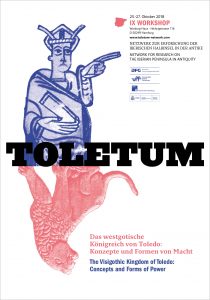
Toletum IX, Das Westgotenreich von Toledo: Konzepte und Formen der Macht
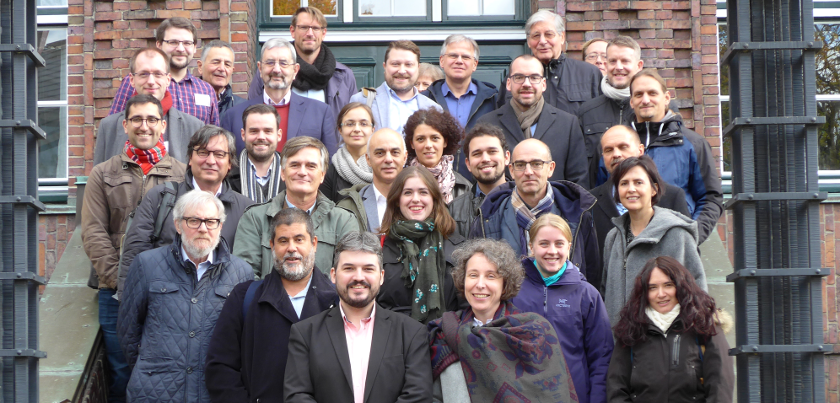
Der 9. Workshop, der vom 25. bis zum 27. Oktober 2018 im Hamburger Warburg-Haus in Zusammenarbeit mit Paulo Henrique de Carvalho Pachá (Universidade Federal Fluminense, Rio de Janeiro) stattfand, stand ganz im Zeichen des Westgotenreiches von Toledo, und zwar der Konzepte und Formen von Macht.
Ein ausführlicher Bericht zu den spannenden Beiträgen – wie den neuesten Erkenntnissen hinsichtlich Ankunft und Ansiedlung, der Frage der Ethnizität, der Münzprägung und dem „epigraphic habit“ oder auch der „Internationalität“ der westgotischen Kirche – folgt in Kürze (Fotos finden sich dagegen schon jetzt auf Facebook!).
Die Herausbildung der Hegemonialstellung Toledos wurde entgegen der älteren Forschung nicht als Unterordnung der lokalen Mächte unter die expandierende Zentralmacht, sondern als Ergebnis eines Aushandlungsprozesses zwischen den Repräsentanten der Aristokratie, der Kirche und der Monarchie verstanden.
Toletum – IX. Workshop, 25. – 27. Oktober 2018
Am Donnerstag dieser Woche beginnt der 9. Workshop, der in Zusammenarbeit mit Paulo Henrique de Carvalho Pachá (Universidade Federal Fluminense, Rio de Janeiro) stattfindet, mit dem Fokus Das Westgotenreich von Toledo: Konzepte und Formen der Macht um 18 Uhr im Hamburger Warburg-Haus mit einem Vortrag von
18:30 Uhr, Herwig Wolfram (Universität Wien): How to stay Gothic without a Gothic king?
 Weitere Höhepunkte:
– am Freitag, 26. Oktober,
10:15 Uhr, Javier Arce (Université de Lille): The Visigoths in Hispania: new perspectives concerning arrival and settlement
11.30 Uhr, Stefan Esders (Freie Universität Berlin), ‚Fugitives‘ and ‚traitors‘: A discourse on center and periphery in Visigothic law
15.30 Uhr, Walter Pohl (Universität Wien), Power and strategies of identification in Visigothic Spain
17.30 Uhr, Christoph Eger (Freie Universität Berlin), The Visigothic kingdom – a kingdom without Visigoths?
– am Samstag, 27. Oktober:
9.30 Uhr, Lauro Olmo Enciso (Universidad de Alcalá), Recópolis, the representation of power in a complex landscape
15.30 Uhr, Jorge Morín de Pablos (AUDEMA Madrid), Ecclesiastical landscapes in the territorium of the Visigothic Capital of Toledo
18.15 Uhr, Jamie Wood (University of Lincoln), The church, royal government and local power in Visigothic Hispania and Byzantine Spania: comparative perspectives
sowie der Abendvortrag um
19:00 Uhr, Eduardo Manzano Moreno (Consejo Superior de Investigaciones Científicas Madrid), The day after. The Umayyad point of view
Programm: Toletum IX, 10.2018
Interessierte sind herzlich willkommen! ¡No faltéis!! ¡Recomendabilísimo!
Diplomatie und politische Kommunikation im Westen des Mittelmeerraums (3.-1. Jh. v. Chr.)
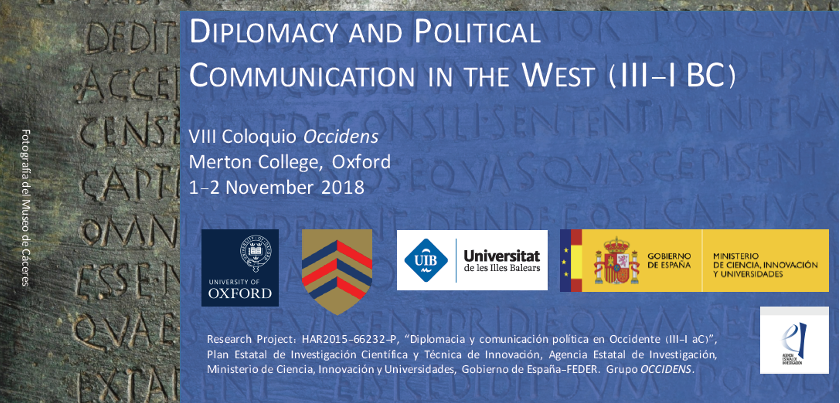 8. Kolloquium der Forschergruppe Occidens. Mit Beiträgen u. a. von
– Lisa Eberle (Eberhard Karls Universität Tübingen), Western Interpretations of Roman Imperialism? Appian on Resistance in Spain (and North Africa)
– Enrique García Riaza (Universitat de les Illes Balears), Political Summits Outside Rome: Aims, Practices and Limits
– Pierre Sanchez (Université de Genève), Roman imperatores as Treaty-makers in the West: The New Coins from Hispania
– Eduardo Sánchez Moreno / Tomás Aguilera Durán
(Universidad Autónoma de Madrid), Lusitanians Facing Rome (151-150 BC): An Unconditional Surrender to the Praetor Ser. Sulpicius Galba?
– Laurent Lamoine (Université Clermont Auvergne), La fin de la Guerre des Gaules sous Auguste?
1. bis 2. November 2018
 Organisation: Enrique García Riaza (Universitat de les Illes Balears) und Jonathan Prag (Merton College, Oxford) / Proyecto HAR2015-66232: “Diplomacia y comunicación política en Occidente, III-I a. C.)” HAR2011-27782
Veranstaltungsort: Merton College, Oxford
Programm: Occidens VIII, 11.2018
„De re rustica“. Wirtschaftliche Aktivitäten auf den Feldern Hispaniens
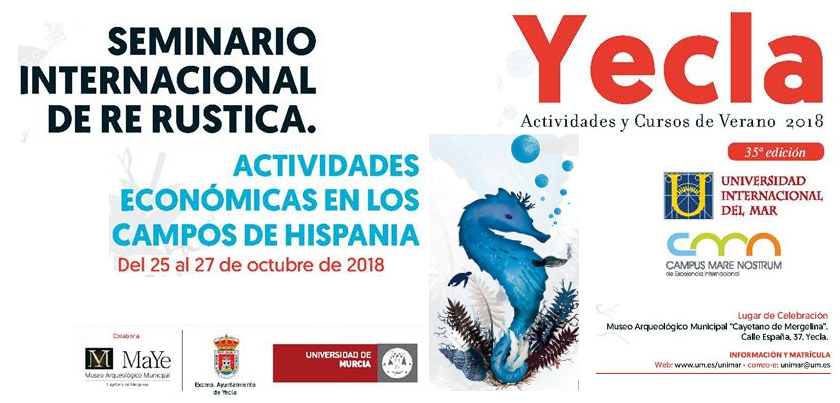
Internationales Seminar über „Die wirtschaftlichen Aktivitäten auf den Feldern Hispaniens“ – Aus dem Ankündigungstext der Veranstalter: „Los objetivos de este seminario internacional son
1. Analizar la producción en el mundo rural, planteando un estado de la cuestión en las provincias occidentales del Imperio.
2. Estudiar la tipología, evolución y formas de asentamiento y producción asociadas al ámbito rural en la Hispania romana.
3. Analizar la diversidad de modelos de asentamiento en los campos hispanorromanos y la diversidad de sus formas, modelos y tipos de explotación económica.
4. Estudiar las villas hispanorromanas como centros de producción y manufacturación agropecuaria, en particular oleícola y vitivinícola.
5. Dar a conocer, estudiar y analizar críticamente algunos casos significativos en el panorama de la explotación económica del medio rural y villas de las villas romanas de Hispania.
6. Estudiar y contextualizar los nuevos hallazgos arqueológicos en la villa romana de Los Torrejones de Yecla.
7. Conocer el nuevo proyecto expositivo del MAYE y estudiar in situ los vestigios de Los Torrejones y del Monte Arabí, como exponentes relevantes de la riqueza patrimonial e histórica de Yecla.“
Mit Beiträgen u.a. zu
- La arqueología de la producción en el mundo rural. Estado de la cuestión en las provincias occidentales del Imperio, Jean Pierre Brun (Collège de France Paris)
- La producción, almacenaje y conservación del cereal en los establecimientos rurales hispanorromanos, Javier Salido Domínguez (Universidad Complutense de Madrid)
- Garum y salsamenta en las costas y villas hispanorromanas, Darío Bernal Casasola (Universidad de Cádiz)
- La organización de la producción minero-metalúrgica en la hispania romana: el caso de las minas de plomo y plata del ager Carthaginiensis, Juan Antonio Antolinos Marín (Universidad de Murcia)
- Actividades económicas en los campos de Hispania: a modo de recapitulación, Carmen Fernández Ochoa (Universidad Autónoma de Madrid)
25. bis 27. Oktober 2018
Organisation: José Miguel Noguera Celdrán (Universidad de Murcia); Liborio Ruiz Molina (Arqueológico Municipal de Yecla); Virginia García-Entero (UNED Madrid); Yolanda Peña Cervantes (UNED Madrid)
Veranstaltungsort: Museo Arqueológico Municipal „Cayetano de Mergelina“; Calle España, 37; Yecla
Programm: De re rustica 10.2018 (pdf)